The History of
Public Domain Literature
From early copyright laws to today's digital libraries, let's explore how people have fought to keep our stories free and dive into the ongoing debate over who truly owns the greatest books of the past.
For most of human history, the idea that someone could actually "own" a story seemed completely ridiculous. When classic tales like Homer's Iliad were shared across the ancient world, they belonged to everyone. People freely changed, adapted, and improved these stories every time they passed them on to the next generation.
The concept that a single person or a massive publishing company could lock down a story for nearly a century is a very new invention. To really understand why we care so much about the public domain today, we have to look back at how copyright laws were born, how big corporations started using them for profit, and how the internet is helping us take our shared culture back.
1. The Printing Press and the Printing Monopoly
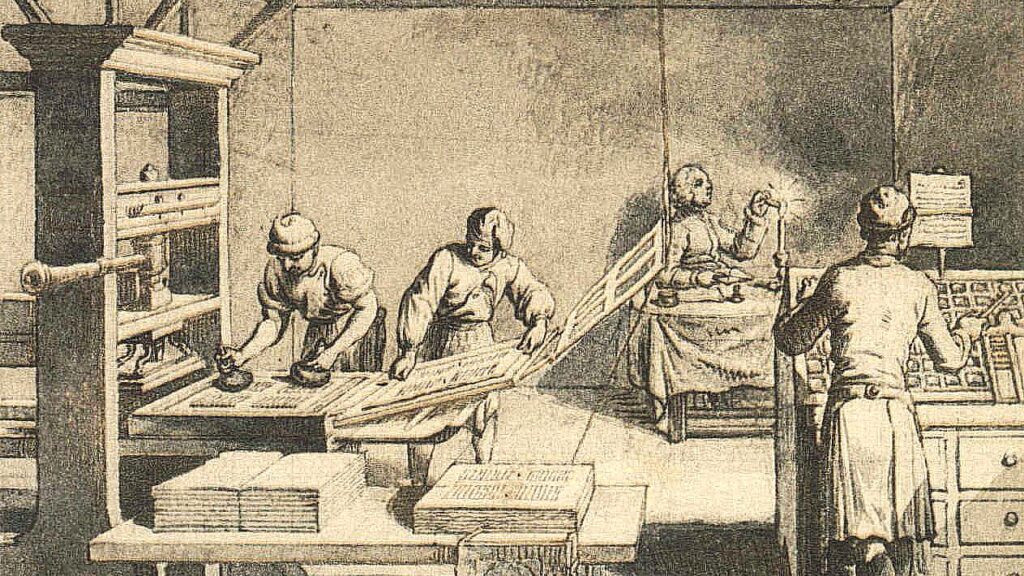
Long before the 15th century, books had to be painstakingly copied out by hand. Because this process took so long, no one really worried about book piracy. That all changed when the printing press was invented. Suddenly, books could be printed and sold in massive numbers.

First Folios
Back in 1557, the English government gave a single group called the Stationers' Company total control over printing. This rule was not made to protect the people writing the books. Instead, it was a sneaky way to censor the public. By controlling the printing presses, the government could easily silence political rebels. Even legendary writers like William Shakespeare did not actually own the rights to their own plays. The publishers who printed them held all the power.
Things finally changed in 1710 with the creation of the world's first real copyright law, known as The Statute of Anne. It was a massive breakthrough because it finally gave ownership rights to the author rather than the printing companies. Best of all, it made sure these rights were strictly temporary. Writers were given exclusive rights for 14 years, and they could renew for another 14. After a maximum of 28 years, the book officially belonged to the public.
“Copyright was originally created to be a short, temporary reward to encourage people to write new things. It was never meant to be a permanent asset owned by massive corporations.”
2. The 20th Century: The Era of Extension
This balanced system worked beautifully for almost two hundred years. The original laws in the United States completely agreed with this idea, granting creators rights only for a very specific, limited amount of time. A healthy public domain allowed visionaries like Walt Disney to take classic fairy tales from the Brothers Grimm and turn them into massive cinematic empires without having to ask for permission.

Corporate Monopolies
However, the 20th century completely changed the game. As the entertainment world exploded into a multi billion dollar industry, giant corporations started to panic. They realized that their most profitable properties like books, movies, and beloved characters were about to lose their copyright protection and enter the public domain.
These companies spent a lot of money lobbying the government to drastically extend copyright laws. The most famous example is the 1998 extension, which many people jokingly called the Mickey Mouse Protection Act. This new law locked down corporate owned works for 95 years, and protected individual authors for their entire lifetime plus another 70 years. Because of this, the public domain basically hit a brick wall. For two straight decades, almost nothing new became free for the public to use.
3. The Digital Renaissance and the Great Thaw
This massive freeze on the public domain did serious damage to literary history. Countless books became orphan works. These were stories where the original author had passed away, but the legal rights were still locked down tightly. Because nobody could legally reprint or digitize them, thousands of amazing books simply faded away into obscurity.
Thankfully, the rise of the internet sparked a massive pushback. Amazing projects like the Internet Archive and Project Gutenberg started working around the clock to digitize any classic book they could legally get their hands on. Finally, on January 1, 2019, the long twenty year freeze came to an end. Historic books from 1923 were finally set free and entered the public domain.
Now, we celebrate January 1st as Public Domain Day all over the world. Every single year, a fresh batch of classic literature is officially liberated from corporate vaults. We have recently seen legendary works like The Great Gatsby and Winnie the Pooh finally become free for everyone to enjoy.
4. Why the Battle Still Matters
The story of the public domain is really an endless tug of war. On one side, companies want to privatize culture, and on the other side, everyday people want to protect our shared human history. When books are free and unowned, smaller independent publishers can design stunning new physical editions. Filmmakers can put fun new spins on classic characters, and teachers can easily share world class literature with their students without constantly worrying about legal issues.
As we move deeper into the digital age, fighting for a healthy public domain is more important than ever. It is the only way we can guarantee that the greatest achievements of human creativity stay exactly where they belong. They belong in the hands of the public.