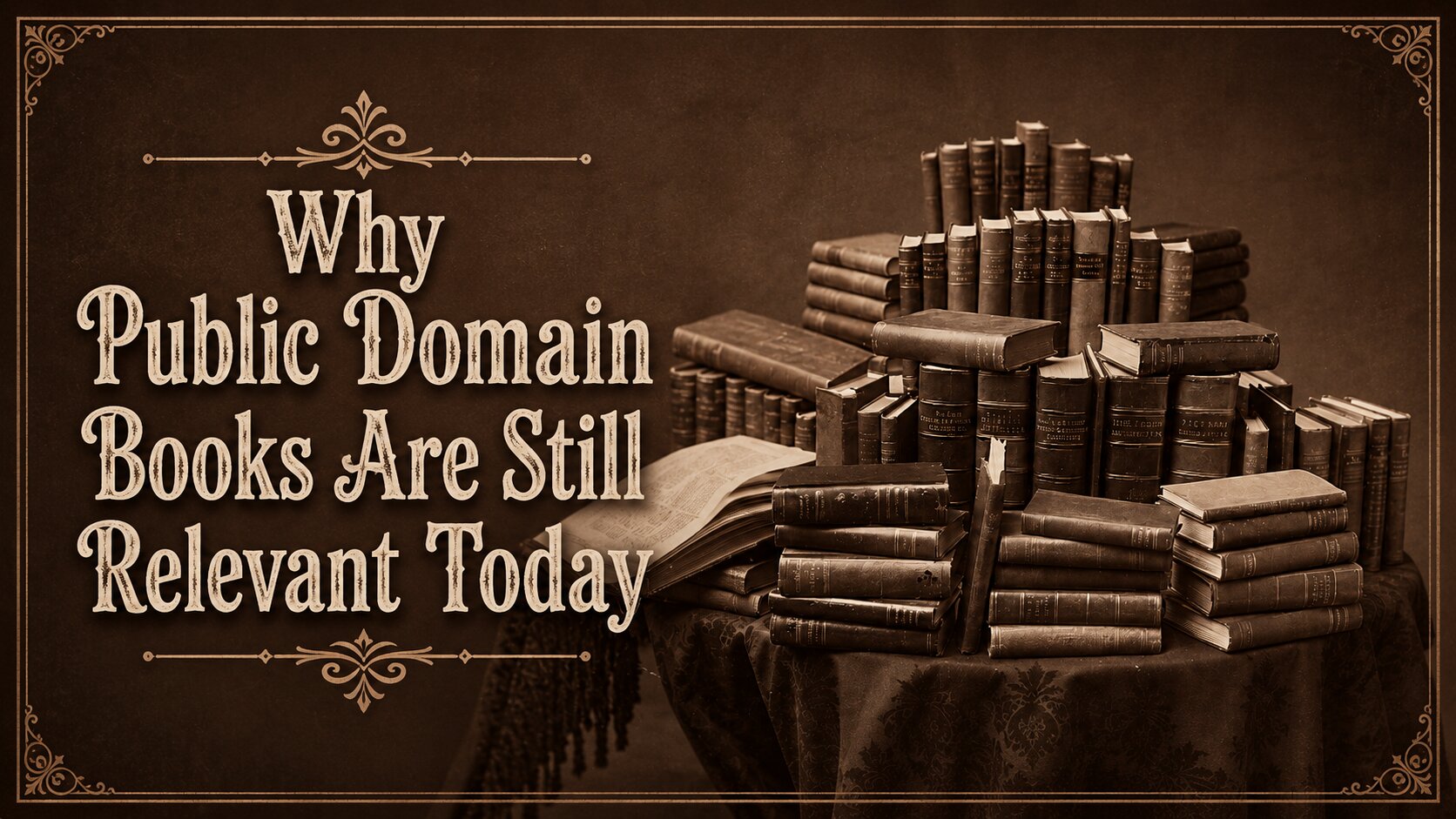
Why Public Domain Books Are Still Relevant Today
An inquiry into the intellectual commons: how restriction-free historical masterworks act as the ultimate catalyst for contemporary creativity, uninhibited education, and independent publishing.
In a world where many books, movies, and digital products are locked behind subscriptions and licenses, public domain books offer something different. These are books that are no longer protected by copyright, which means anyone can read, share, publish, or adapt them freely. They belong to everyone and can be enjoyed without restrictions.
Some people think public domain books are old and no longer useful. In reality, they continue to influence modern culture, education, and publishing. Many famous stories, ideas, and characters that we still enjoy today come from public domain works. Here are some reasons why these books remain valuable in today's world.
1. The Engine of Infinite Adaptation
Copyright protection gives authors the opportunity to earn from their work, but eventually many classic books enter the public domain. When that happens, their stories and characters become available for everyone to use, reinterpret, and share.

Cultural Archetype
Think about characters like Sherlock Holmes or Dracula. Because these stories are in the public domain, filmmakers, writers, and artists can create new versions without needing special permissions. This keeps classic stories alive and introduces them to new generations. Every adaptation helps these timeless works remain part of modern culture.
“Classic books stay alive when each generation has the freedom to discover, reinterpret, and share them in new ways.”
2. Democratic Access to Education
Public domain books make knowledge accessible to everyone. Since these works can be freely shared and distributed, students, teachers, and readers around the world can learn from them without worrying about expensive licensing fees.
Books such as Plato's The Republic, Victor Hugo's Les Misérables, and Shakespeare's plays continue to teach valuable lessons about society, justice, and human nature. Because these works are freely available, anyone with an interest in learning can explore them regardless of their financial situation.
3. A Renaissance for Independent Publishing
Public domain books also create opportunities for independent publishers. Unlike copyrighted works that require licensing agreements and royalty payments, public domain titles can be published freely, making it easier for smaller publishers to bring classic literature to readers.
This freedom allows publishers to focus on creating beautiful editions with better design, typography, illustrations, and print quality. It also helps preserve important books that might otherwise disappear from the market. As a result, readers gain access to high-quality editions of timeless classics.
4. The Testing Ground for the Digital Future
Public domain books play an important role in the digital world as well. Large online libraries and educational projects rely on these freely available works to make literature accessible to readers everywhere.
Because books like Frankenstein and Moby-Dick are free to use, developers, researchers, educators, and archivists can use them for digital projects, accessibility tools, language research, and preservation efforts. In many ways, some of the world's oldest stories continue to support the technologies of the future.